
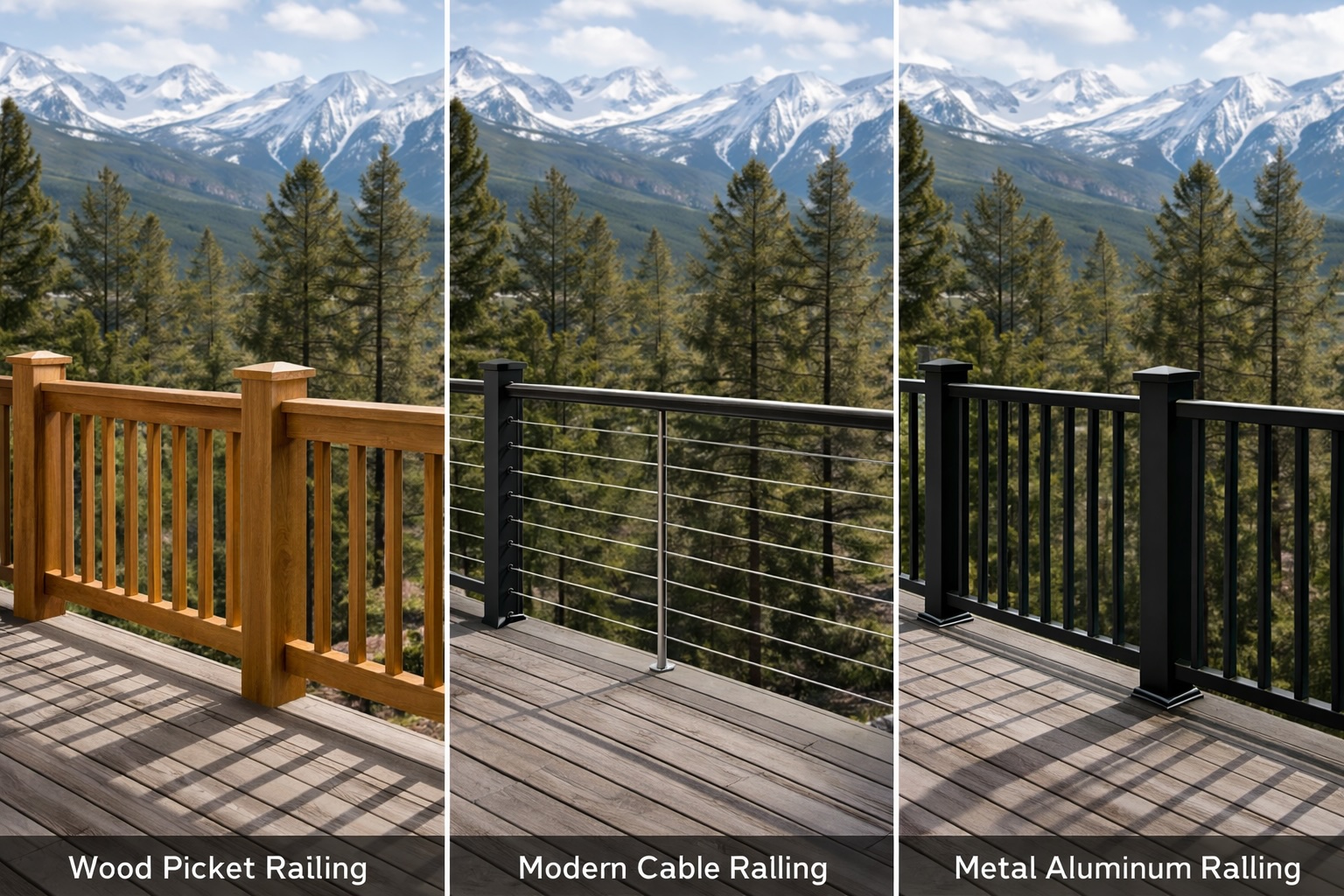
Deck railings serve dual purposes that matter equally. They protect people from falls while defining your deck’s visual character. The right railing choice handles Colorado’s weather demands, meets safety codes, and complements your home’s architectural style.
When planning a deck building project, railing selection affects both immediate project costs and long-term satisfaction with your outdoor space. Understanding how different materials and styles perform under Colorado conditions helps you make decisions that serve your property well.
Code Requirements You Need to Know
Colorado deck railings must meet specific safety standards. Any deck surface more than 30 inches above grade requires railings. Railing height must reach at least 36 inches measured from the deck surface to the top rail. Some areas require 42-inch heights for elevated decks.
Baluster spacing presents critical safety requirements. No opening can allow a 4-inch sphere to pass through. This prevents small children from slipping between balusters or getting stuck. The rule applies to all openings, including between balusters and between bottom rails and deck surfaces.
Top rail strength requirements ensure railings withstand expected loads. Rails must resist 200 pounds of force applied horizontally at any point. Graspable handrails become required for deck stairs, typically requiring round or shaped profiles between 1.25 and 2 inches in diameter.
Wood Railing Options
Pressure-treated pine railings offer the most economical option at $15-25 per linear foot installed. The chemical treatment resists rot and insects, though Colorado’s intense UV exposure weathers untreated wood to gray within months. Maintaining appearance requires staining or painting every 1-2 years. Our dry climate causes dimensional changes as wood shrinks, potentially loosening balusters over time.
Properly maintained pressure-treated railings last 15-20 years. This lifespan assumes diligent care including regular cleaning and refinishing. The low initial cost appeals to budget-conscious projects, but factor in maintenance time and expense.
Cedar and redwood bring natural beauty with rich colors and attractive grain patterns. These species resist rot and insects naturally. Material and installation costs run $25-40 per linear foot. UV exposure bleaches both species to silver-gray rapidly without protective finishes. Maintaining natural color requires annual treatment.
These premium materials create warm, natural aesthetics that suit craftsman, mountain, and traditional home styles. Well-maintained cedar or redwood railings last 20-30 years, making sense when appearance matters significantly and you’re committed to regular maintenance.
Composite and Vinyl Systems
Composite railing systems combine wood fibers with plastic polymers, then cover surfaces with protective polymer caps. Complete systems cost $35-55 per linear foot installed. Modern capped composites resist Colorado’s UV intensity effectively, maintaining color for 20-25 years with minimal fading.
The protective cap prevents moisture absorption, eliminates rot concerns, and reduces expansion and contraction compared to wood. Installation uses manufacturer-designed bracket systems that ensure code compliance. Hidden fasteners create clean appearances without visible hardware.
The materials resist scratching, staining, and splintering. Cleaning requires only occasional washing with soap and water. The minimal maintenance requirement makes these systems particularly attractive for second-story decks where access complicates refinishing.
Vinyl railings use PVC construction throughout, costing $20-35 per linear foot installed. The completely synthetic construction maximizes weather resistance. Vinyl resists moisture perfectly, never rotting or supporting mold growth. The material won’t splinter, requires no painting, and cleans easily.
However, Colorado’s temperature extremes challenge vinyl. The material becomes brittle in extreme cold, increasing crack risk from impacts. Color options remain more limited than composite systems. Quality varies substantially, so premium vinyl railings with reinforced construction become essential for adequate strength.
Metal Railing Systems
Aluminum railing systems deliver durability with contemporary aesthetics. Powder-coated aluminum resists corrosion excellently, handling Colorado’s weather without rust. Complete systems cost $40-65 per linear foot installed.
The material’s light weight simplifies installation while maintaining code-required strength. Aluminum doesn’t rot, warp, or attract insects. Powder-coated finishes resist fading and maintain appearance for 20-30 years. Maintenance involves only periodic cleaning.
Design flexibility allows various styles from traditional picket patterns to contemporary cable or glass panel systems. Aluminum frames can incorporate different infill materials, creating custom looks. The material conducts temperature, becoming hot in summer sun and cold during winter, which affects comfort when touching railings.
Steel railings offer maximum strength and design flexibility. Custom fabrication allows virtually any configuration, with costs ranging from $50-100+ per linear foot depending on design complexity. Properly finished steel resists Colorado weather well when powder coated or quality painted.
Steel’s strength allows slender profiles that maintain required load resistance while appearing more delicate. The material handles our climate well when properly finished, lasting 30-40 years or more with appropriate care. Professional fabrication and installation become essential.
Cable and Glass Panel Options
Cable railing systems use stainless steel cables as balusters, creating nearly unobstructed views. These modern systems cost $60-100 per linear foot installed. The minimal visual interruption appeals for decks with desirable views or contemporary architectural styles.
Cable systems require substantial posts to handle cable tension properly. Professional installation becomes essential since improper tensioning creates safety issues. Stainless steel cables resist Colorado weather excellently, requiring only periodic cleaning and tension checking.
Glass panel railings maximize views while providing wind protection that cables cannot offer. Tempered glass panels cost $100-150 per linear foot installed. The substantial investment buys unobstructed sightlines and weather protection that enhances deck usability during windy conditions.
Glass requires regular cleaning to maintain clarity, particularly in areas with hard water or dusty conditions. The panels resist weather perfectly but show dirt and water spots readily.
Design Considerations
Railing style should complement your home’s architecture. Traditional homes pair well with wood or vinyl railings featuring classic picket patterns. Contemporary designs work with metal, cable, or glass systems emphasizing clean lines.
Color selection affects both aesthetics and performance. Lighter colors reflect heat better, keeping railings cooler during summer. Darker colors may show fading more obviously over time, though modern finishes have improved dramatically.
Post spacing and sizing affect both structural integrity and visual rhythm. Code requirements set maximum spacing, but aesthetic preferences often call for closer intervals that create more vertical emphasis.
Making Your Railing Decision
Material selection balances initial budget against maintenance willingness and aesthetic goals. Wood railings cost less initially but demand ongoing care. Composite and metal systems invest more upfront for reduced lifetime maintenance.
Consider your deck’s height and accessibility. Second-story railings prove difficult to refinish, making low-maintenance materials more attractive. Climate exposure affects performance too. Decks in full sun face maximum UV stress and temperature extremes, while partially shaded decks experience gentler conditions.
Professional installation ensures code compliance and proper performance. Experienced Colorado deck builders understand regional requirements including wind resistance specifications, proper fastening for temperature extremes, and techniques that ensure railings meet safety standards while delivering lasting performance.
Frequently Asked Questions
What railing height does Colorado require?
Colorado requires deck railings at least 36 inches high for decks over 30 inches above grade. Some jurisdictions require 42-inch heights for elevated decks. Stair handrails must be 34-38 inches above stair nosings.
How much do deck railings cost in Colorado?
Pressure-treated wood costs $15-25 per linear foot installed. Composite systems run $35-55. Aluminum costs $40-65. Cable and glass systems range $60-150 per linear foot depending on design complexity.
Can I use cable railings in Colorado?
Yes, cable railings work well when properly installed. Use stainless steel cables that resist weather. Ensure proper tensioning and check cables periodically since temperature changes may require adjustments.
What railing material lasts longest in Colorado?
Aluminum and stainless steel systems last longest with minimal maintenance, typically 30-40+ years. Quality composite railings last 25-30 years. Properly maintained wood railings last 15-30 years depending on species and care.
Do glass railings handle Colorado weather?
Tempered glass panels handle Colorado weather excellently. They resist temperature extremes, won’t fade, and provide wind protection. Glass requires regular cleaning but needs no other maintenance.
How often do wood railings need refinishing?
Wood railings in Colorado need refinishing every 1-2 years to maintain appearance and protection. Skipping maintenance accelerates deterioration through UV damage and moisture penetration.
Planning Your Deck Railings
Railing selection represents an important decision in deck construction planning. The right choice enhances safety, complements your home’s design, and serves reliably through Colorado’s demanding conditions.
Ready to plan deck railings that combine safety with style? Contact Vertical Contracting to discuss your project and receive expert guidance on railing options that meet code requirements while enhancing your outdoor living space.