
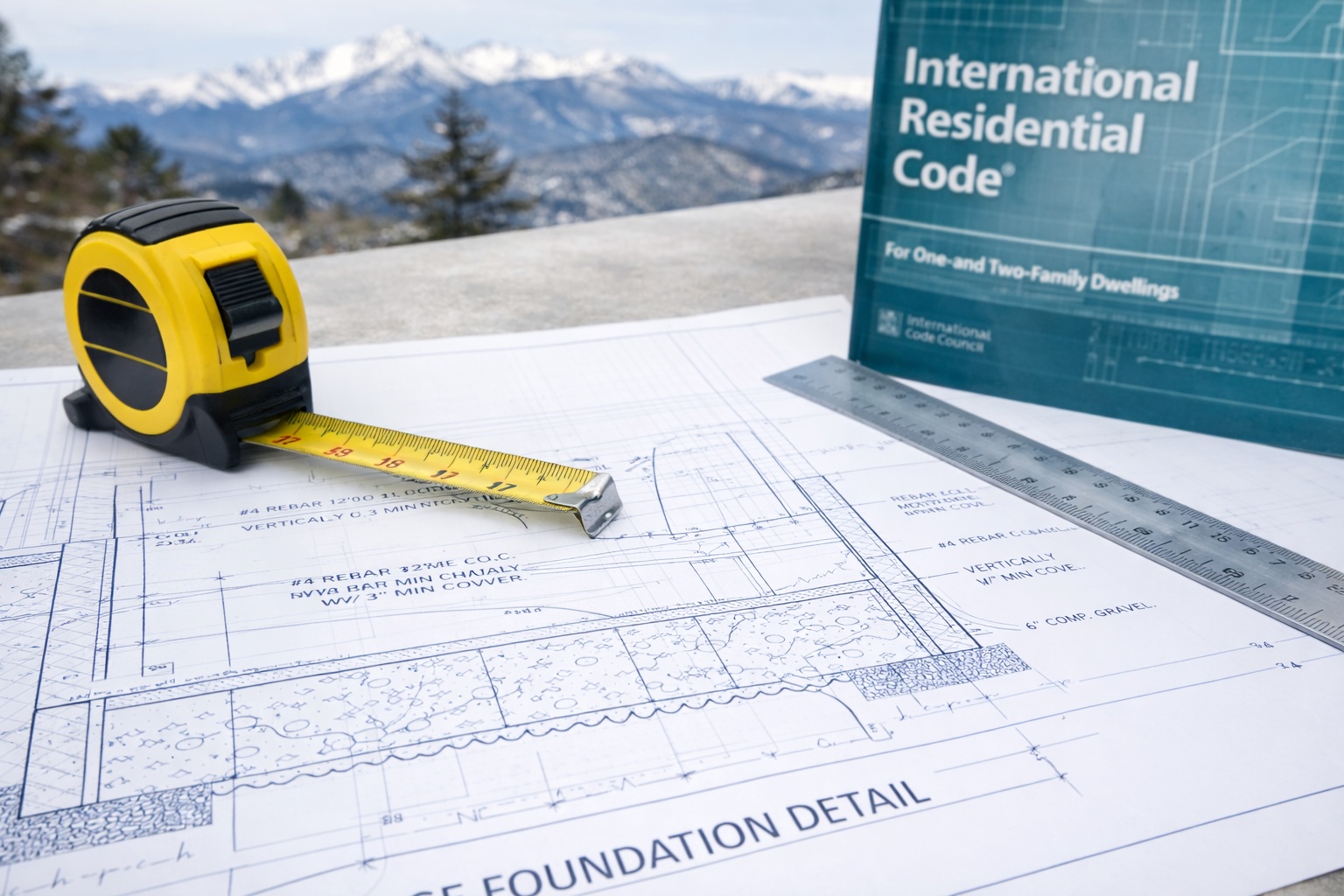
Planning a detached garage in Colorado means navigating building codes designed for our unique climate challenges. These regulations address everything from foundation depth for frost protection to structural connections that resist wind and snow loads. Understanding code requirements helps you plan realistic budgets and timelines while avoiding costly construction delays.
Colorado follows the International Residential Code with state and local amendments that reflect our altitude, weather extremes, and seismic considerations. Your specific requirements depend on your property’s location, as mountain communities enforce different standards than Front Range cities.
How Colorado Building Codes Work
Colorado adopts the International Residential Code as its baseline, then allows local jurisdictions to add amendments addressing regional conditions. Denver’s codes differ from Boulder’s, which differ from mountain town requirements. This creates a patchwork of regulations that vary by municipality.
State-level amendments address Colorado-specific concerns including snow loads based on elevation, wind resistance requirements for different geographic areas, and foundation depths accounting for frost penetration. Local amendments add another layer, sometimes requiring enhanced structural connections or specific construction techniques.
The Division of Fire Prevention and Control maintains oversight of fire-related codes statewide, while individual building departments enforce structural, electrical, and mechanical requirements. The Office of the State Architect maintains Colorado’s approved building codes that apply to state construction, while local jurisdictions establish their own requirements for residential projects. Understanding which jurisdiction governs your property is essential before beginning design work.
Foundation Requirements
Frost Depth and Footing Specifications
Colorado’s freeze-thaw cycles demand proper foundation depth. Most Front Range areas require footings at least 30 inches below grade. Mountain communities often require 36-42 inches, depending on elevation and local frost depth data.
Footings must be a minimum 12 inches wide for single-story garages, though many municipalities require 16-inch width for better load distribution. Concrete must achieve a minimum 2,500 PSI compressive strength, with 3,000 PSI preferred for garage applications.
Reinforcement requirements include a minimum #4 rebar placed longitudinally in footings. Some jurisdictions require additional reinforcement for expansive clay soils common across the Front Range. Foundation walls need horizontal and vertical reinforcement meeting specific spacing requirements.
Soil Conditions and Special Requirements
Expansive clay soils affect much of Colorado’s populated areas. These soils expand when wet and contract when dry, creating pressure on foundations. Building codes require engineered solutions for sites with problematic soils, often including deeper foundations, additional reinforcement, or special drainage systems.
Mountain properties face different challenges, including rocky substrates that complicate excavation and sloped sites requiring special foundation designs. Codes address these situations with requirements for stepped footings, additional structural support, and enhanced drainage.
Structural Requirements
Wind Load Specifications
Colorado’s wind requirements vary dramatically by location. Plains areas near the Kansas border face higher wind loads than protected mountain valleys. Building officials determine required wind resistance based on ASCE 7 wind maps and local exposure conditions.
Typical residential garages in moderate wind zones require structural connections rated for 90-110 mph winds. High-wind areas demand enhanced connections and additional bracing. Metal connectors linking roof framing to walls and walls to foundations must meet specific load ratings.
Wind provisions affect roof sheathing attachment, wall bracing requirements, and garage door specifications. All these elements work together to resist wind forces that could compromise structural integrity.
Snow Load Calculations
Snow loads increase with elevation. Denver area garages are typically designed for 25-30 PSF ground snow load. Boulder requires 30-40 PSF. Mountain communities often require 50-80 PSF or higher depending on specific location and elevation.
Roof pitch affects snow load requirements. Steeper roofs shed snow more effectively, potentially allowing reduced structural requirements. Flat or low-slope roofs must handle full calculated snow loads since snow accumulates rather than sliding off.
Roof framing, wall structures, and foundations all must accommodate snow loads. This affects lumber sizes, connection specifications, and overall structural design.
Seismic Considerations
Colorado sits in Seismic Design Category B or C depending on location. While our earthquake risk rates lower than West Coast states, codes still require basic seismic provisions. These include proper foundation anchorage, wall bracing, and roof-to-wall connections.
Mountain areas near known fault lines may face enhanced seismic requirements. Foundation anchor bolts, hold-down devices, and structural shear walls must meet minimum specifications ensuring buildings resist seismic forces.
Electrical Code Requirements
Detached garages require electrical service meeting National Electrical Code standards with Colorado amendments. Minimum requirements include adequate lighting, properly spaced outlets, and GFCI protection for all receptacles.
At least one lighting outlet controlled by a wall switch must serve the garage. The switch must be located at the entry door for convenient access. Additional lighting serves specific work areas or storage sections.
Receptacle requirements depend on garage size and intended use. Minimum spacing typically requires outlets every 12 feet along walls. GFCI protection is mandatory for all garage receptacles regardless of location. Many homeowners add dedicated circuits for workshop equipment, EV charging, or other specialty uses during construction rather than retrofitting later.
Circuit capacity must accommodate anticipated loads. Basic garage electrical typically requires 15-20 amp circuits. Workshops or garages with significant equipment needs may require 30-50 amp circuits or higher.
Fire Separation Requirements
Detached garages located within three feet of property lines or other structures face fire separation requirements. These include fire-rated wall assemblies, protected openings, and specific construction techniques preventing fire spread.
Garages closer to homes may require one-hour fire-rated wall assemblies on sides facing the house. This typically involves 5/8-inch Type X drywall on framing, proper sealing of penetrations, and fire-rated doors where required.
Fire-rated construction adds costs but provides important protection. Understanding these requirements during design prevents surprises during permitting.
Permit and Inspection Process
Required Documentation
Permit applications require site plans showing garage location, setbacks from property lines, and relationships to existing structures. Construction drawings must detail foundation design, framing specifications, and electrical plans meeting code requirements.
Structural calculations may be required for unusual designs, large garages, or properties with challenging conditions. Engineered plans typically need professional engineer stamps for submittal.
Many jurisdictions now accept electronic plan submissions. Processing times vary but typically range from two to four weeks for straightforward projects. Complex designs or incomplete submissions extend this timeline.
Inspection Milestones
Building departments schedule inspections at critical construction phases. Foundation inspections occur before concrete placement, ensuring proper depth, reinforcement, and anchor bolt positioning.
Framing inspections verify lumber sizes, connection specifications, and overall structural compliance before walls get covered. Electrical rough-in inspections check wiring, boxes, and circuits before insulation and drywall installation.
Final inspections review completed work, confirming all code requirements have been met. Passing final inspection allows legal occupancy and ensures your garage meets safety standards.
Missing or failing inspections creates delays while corrections get completed and re-inspections scheduled. Working with experienced Colorado garage builders familiar with local inspection requirements helps avoid these problems.
Zoning vs. Building Codes
Zoning regulations differ from building codes, though both affect your project. Zoning controls where you can build, how large structures can be, and setback requirements from property lines. Building codes govern how structures are built, focusing on safety and structural integrity.
Zoning approval typically precedes building permit applications. Some projects need zoning variances before permits can be issued. Understanding both sets of requirements early in planning prevents surprises.
Common Code Violations to Avoid
Inadequate foundation depth remains one of the most common violations. Contractors sometimes assume standard depths without verifying local frost line requirements, leading to failed inspections.
Missing or improperly installed structural connections cause frequent problems. Metal connectors must match specified types and be installed with correct fasteners. Substitutions without engineering approval violate codes.
Electrical violations often involve missing GFCI protection, inadequate circuit capacity, or improper wire sizing. These issues compromise safety and fail inspections.
Regional Variations Across Colorado
Front Range cities including Denver, Aurora, and Colorado Springs generally follow similar code requirements with minor local variations. Mountain communities enforce more stringent snow load and foundation depth requirements reflecting their conditions.
Rural areas sometimes operate under county jurisdiction rather than municipal building departments. County requirements may differ from nearby cities, requiring careful verification of applicable codes.
Western Slope communities face different challenges including expansive soils similar to Front Range areas but different wind and snow patterns. Local amendments reflect these regional characteristics.
Frequently Asked Questions
Do all Colorado cities use the same building codes?
No, Colorado cities adopt the International Residential Code with local amendments. While baseline requirements remain similar, local amendments create variations. Always verify specific requirements with your local building department.
How much do building permits cost for detached garages?
Permit costs vary by jurisdiction and project size. Typical costs range from $500 to $2,000 depending on garage size and complexity. Fees cover plan review, inspections, and administrative costs.
Can I use plans from another state for my Colorado garage?
Plans from other states often need modification for Colorado’s specific requirements, including snow loads, wind resistance, and foundation depth. Local engineers or architects should review out-of-state plans.
What happens if I build without permits?
Unpermitted construction creates serious problems. You may face fines, be required to remove completed work, and encounter difficulties selling your property. Permits protect property values and ensure safety.
How long does the permit process take?
Standard garage permits typically process in two to four weeks. Complex projects, incomplete applications, or high-volume periods extend timelines. Early submission prevents construction delays.
Do building codes require insulation in detached garages?
Codes don’t always require insulation for unheated detached garages, though some jurisdictions mandate minimum levels. Insulation provides benefits even when not required, moderating temperatures and reducing condensation.
Planning for Code Compliance
Understanding Colorado building codes early in your planning process helps create realistic budgets and timelines. Code requirements affect structural design, material selection, and construction techniques. These regulations exist to ensure safe, durable buildings that protect property and occupants.
Working with professionals familiar with local codes streamlines permitting and construction. Experienced contractors know jurisdictional variations and maintain relationships with building officials that facilitate smooth approvals.
Planning a detached garage that meets Colorado’s building requirements? Experienced Colorado garage builders navigate code requirements efficiently while delivering quality construction that serves you for decades. Contact Vertical Contracting to discuss your project and ensure proper code compliance from design through completion.