
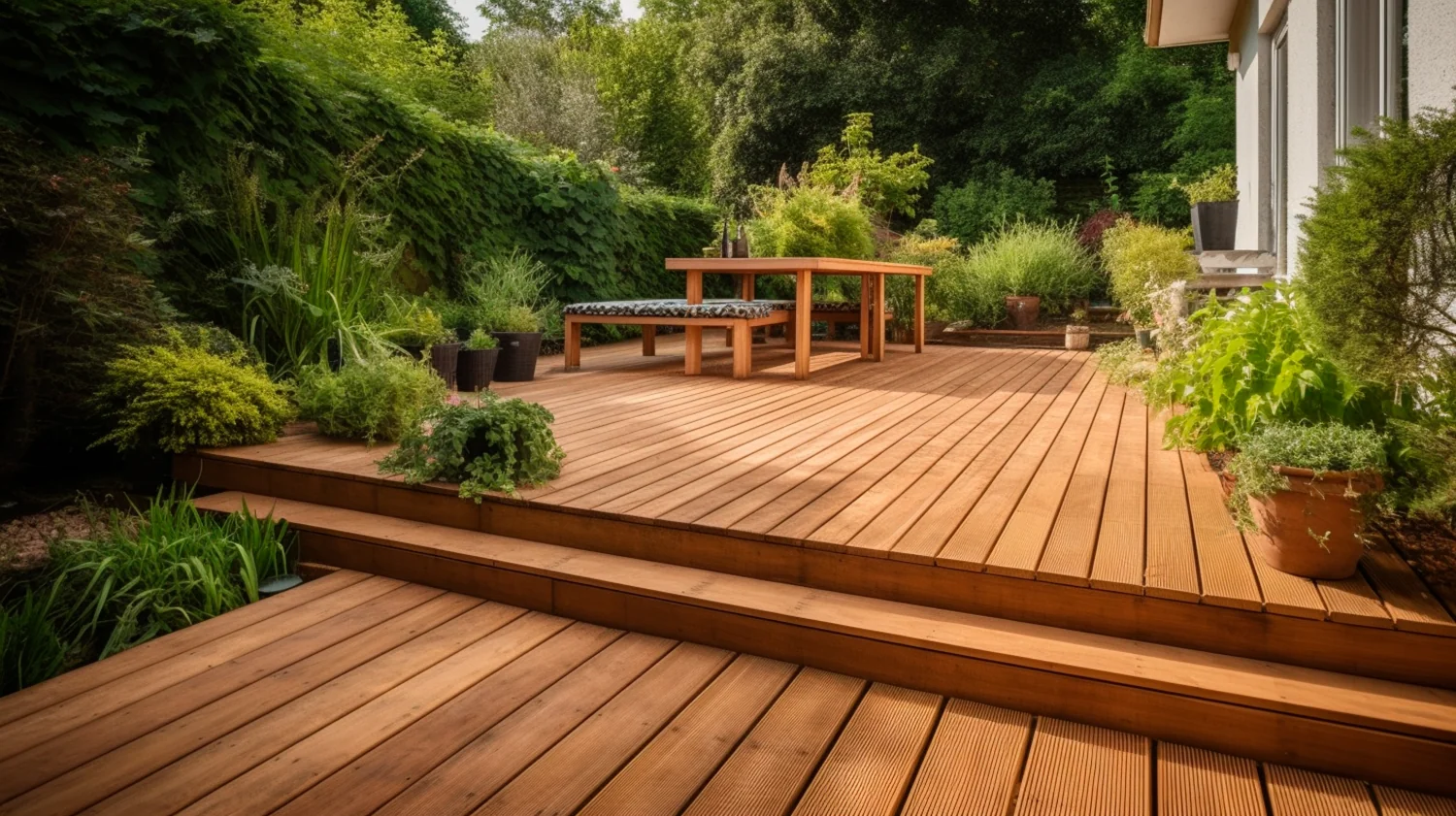
Choosing deck materials for Colorado properties means balancing aesthetic preferences with practical performance under challenging conditions. Our intense UV radiation at altitude fades finishes faster than sea-level climates. Temperature swings exceeding 100 degrees between winter and summer stress materials through constant expansion and contraction. Moisture from snow, rain, and our dry air creates unique demands.
Understanding how different decking materials perform under these conditions helps you select options that maintain appearance and structural integrity for decades.
Wood Decking Options
Pressure-Treated Pine
Pressure-treated lumber remains the most economical wood decking choice. Chemical treatment protects against rot and insects, with material costs typically running $2-4 per square foot. However, Colorado’s climate challenges this budget option significantly.
Our intense sun degrades the wood surface, creating splinters and rough texture within a few years without proper maintenance. The dry air causes boards to shrink, creating gaps that widen over time. Expect to clean, sand, and reseal every 1-2 years to maintain appearance. Skip this maintenance and boards deteriorate rapidly, requiring replacement within 10-15 years. Properly maintained decks can last 20-25 years.
The chemical tint fades to gray without staining. Many homeowners embrace this weathered look, while others prefer maintaining natural wood tones through regular staining.
Cedar and Redwood
Cedar and redwood offer natural beauty and resistance to rot and insects without chemical treatment. Rich colors and attractive grain patterns create appealing outdoor spaces, though material costs run $6-10 per square foot.
UV exposure bleaches these woods to silver-gray within one season without protective finishes. Our altitude intensifies UV damage compared to lower elevations. Maintaining natural colors requires annual cleaning and sealing. The dry climate causes these softwoods to shrink and check (develop surface cracks) more than in humid regions.
Quality cedar and redwood decks maintained properly last 20-30 years in Colorado conditions.
Tropical Hardwoods
Ipe, cumaru, and tigerwood represent ultra-premium options. These dense tropical species resist rot, insects, and wear exceptionally well, with material costs ranging $8-15 per square foot.
Hardwood density creates installation challenges requiring specialized tools and expertise, affecting costs beyond material prices. UV exposure lightens their rich brown tones to gray without regular treatment, though the dense wood resists moisture absorption better than softer species. Properly installed and maintained tropical hardwoods can last 30-50 years.
Composite Decking: Modern Materials, Reduced Maintenance
Capped Composite Technology
Modern composite decking combines wood fibers with plastic polymers, then covers this core with a protective polymer cap. Material costs typically range $6-12 per square foot, positioning composite competitively with premium wood while offering significantly reduced maintenance.
Capped composites resist Colorado’s UV intensity far better than wood. Quality brands maintain color for 20-25 years with minimal fading. The protective cap prevents moisture absorption that causes wood rot and reduces temperature-related expansion and contraction.
These materials resist scratching, staining, and mold growth better than wood. Spilled drinks, dropped food, and tracked-in dirt clean easily without penetrating the surface. Composite decking performance has improved dramatically with capped technology, making it increasingly suitable for challenging climates.
Uncapped Composite and PVC Options
Budget composite products skip the protective cap, offering lower prices ($4-7 per square foot) but compromised performance. These absorb moisture, fade faster, and show scratches more readily than capped alternatives. The moderate cost savings rarely justify performance compromises in Colorado’s demanding climate.
PVC decking eliminates wood fibers entirely, using solid polymer construction. This creates maximum moisture resistance with costs running $8-14 per square foot. Zero moisture absorption means no rot, no mold, and minimal movement with temperature changes. However, PVC feels different underfoot than wood-composite products and becomes slippery when wet.
Colorado-Specific Performance Factors
UV Resistance and Maintenance
Colorado’s altitude intensifies UV exposure. Wood species lighten to gray within months without treatment. Modern capped composites and PVC resist UV damage most effectively, maintaining appearance for decades. Tropical hardwoods naturally resist fading better than softwoods but still require treatment for color retention.
Wood decking demands regular maintenance for longevity. Pressure-treated lumber requires annual or biennial cleaning and sealing. Cedar and redwood need similar attention. Composite and PVC products need only occasional cleaning with soap and water… no sanding, sealing, or staining required.
Moisture and Temperature Challenges
Heavy spring snow followed by intense summer dryness stresses materials through extreme moisture content changes. Wood absorbs moisture readily, requiring protective finishes that need regular renewal. Composite materials resist moisture better, with capped products and PVC offering superior performance.
Summer deck surface temperatures can exceed 150°F in direct sun. Composite decking absorbs more heat than wood, with darker colors reaching higher temperatures. However, modern capped composites include heat-reflective technology, reducing surface temperatures. Lighter colors minimize heat absorption.
Cost Analysis: Initial Investment vs. Long-Term Value
Pressure-treated pine offers the lowest initial cost at $8-15 per square foot installed. Cedar and redwood run $15-25 per square foot. Composite materials range $18-30 per square foot depending on quality. Tropical hardwoods command $25-40 per square foot including specialized installation.
Wood decking requires ongoing maintenance investment. Annual cleaning and sealing costs $2-4 per square foot for professional service. Over 20 years, this adds $40-80 per square foot to initial costs. Composite and PVC maintenance involves occasional cleaning costing pennies per square foot.
The maintenance cost difference over a deck’s lifespan often exceeds initial material cost differences, making composites competitive from a total-cost perspective. Pressure-treated decks last 15-25 years depending on maintenance. Cedar and redwood extend this to 20-30 years. Tropical hardwoods reach 30-50 years. Quality composite products carry 25-50 year warranties suggesting similar or superior longevity.
Making Your Material Decision
Material selection depends on budget constraints, maintenance willingness, aesthetic preferences, and expected deck usage. High-traffic family decks benefit from durable, low-maintenance composites. Smaller decks used occasionally might justify wood’s traditional beauty despite maintenance requirements.
Consider your maintenance habits honestly. If you enjoy outdoor projects and regular deck care, wood might suit your lifestyle. If you prefer minimal upkeep and maximum durability, composite or PVC makes more sense.
Climate exposure affects material choice. Decks in full sun face maximum UV stress and temperature extremes. Partially shaded decks experience less severe conditions. Northern exposures hold snow longer, increasing moisture exposure.
Proper installation critically affects deck performance regardless of material choice. Experienced Colorado deck builders understand local climate challenges, appropriate installation techniques, and code requirements that ensure long-term success.
Frequently Asked Questions
Does composite decking get hotter than wood in Colorado sun?
Composite decking absorbs more heat than wood, with darker colors reaching higher temperatures. Modern capped composites include heat-reflective technology, reducing surface temperatures. Lighter colors minimize heat absorption.
How long does composite decking last in Colorado?
Quality capped composite decking carries 25-50 year warranties. Expect 30-40 years of service from premium products with minimal maintenance under Colorado conditions.
Which wood species works best for Colorado decks?
Cedar and redwood offer the best combination of natural beauty and weather resistance among softwoods. Tropical hardwoods provide maximum durability but cost significantly more. All wood species require regular maintenance in Colorado.
Do composite decks need special cleaning?
Composite decks clean easily with soap and water. Avoid pressure washers which can damage the surface. Annual cleaning maintains appearance and prevents dirt buildup.
How do maintenance costs compare over time?
Wood decking maintenance costs $40-80 per square foot over 20 years. Composite maintenance costs pennies per square foot over the same period, making composites competitive despite higher initial prices.
Can I install composite decking myself?
Composite installation follows similar techniques to wood decking. However, material-specific requirements for fastening, spacing, and edge finishing require careful attention. Manufacturer instructions must be followed for warranty coverage.
Planning Your Colorado Deck
Material selection represents one of many decisions in deck planning. Professional guidance helps navigate choices about size, layout, railings, and features that create outdoor spaces serving your needs for decades.
Ready to plan your Colorado deck with expert material selection guidance? Contact Vertical Contracting to discuss your project and receive professional recommendations for decking materials that perform well in our challenging climate.