
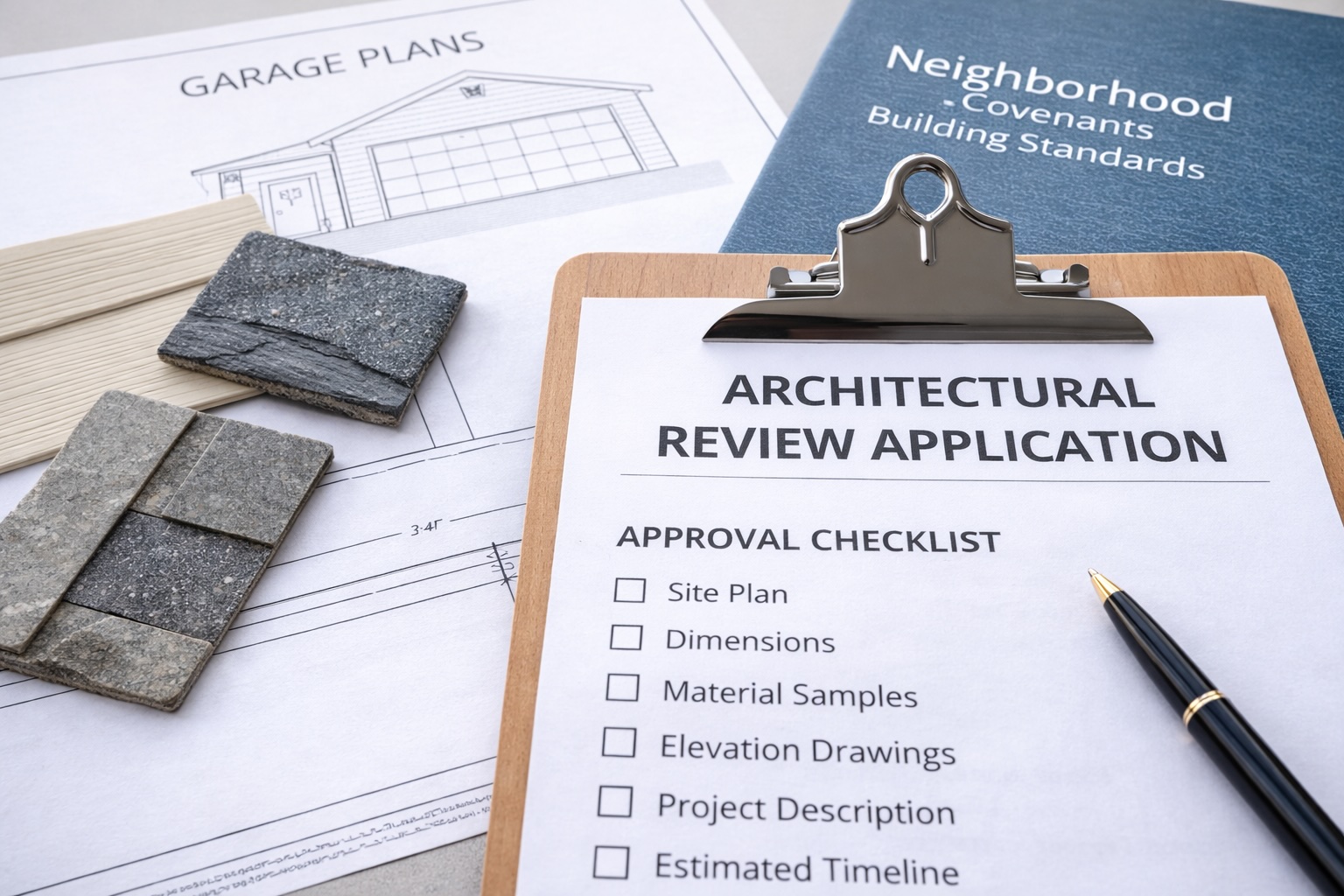
Homeowners’ associations govern roughly 60% of new residential developments across the Denver metro area. If your property falls under HOA jurisdiction, securing architectural approval before starting detached garage construction isn’t optional. It’s required, contractual, and enforceable.
Understanding your HOA’s review process, timeline expectations, and common approval requirements helps you plan effectively. Starting early prevents construction delays and ensures your garage design meets both your needs and community standards.
Understanding HOA Authority
Your HOA’s authority comes from recorded covenants, conditions, and restrictions (CC&Rs) that run with your property deed. These legal documents establish architectural standards, review procedures, and enforcement mechanisms. Violating these agreements can result in fines, construction stop orders, or legal action requiring removal of completed work.
Most Denver area HOAs maintain architectural review committees that evaluate proposed exterior modifications. These committees review garage plans for compliance with community standards covering appearance, size, placement, materials, and design elements.
What Your HOA Reviews
Design and Appearance
HOA architectural guidelines typically specify acceptable garage styles that complement existing neighborhood aesthetics. Roof pitch, siding materials, trim details, and color palettes usually require approval. Many HOAs maintain approved color lists or require matching your home’s existing finishes.
Window styles and garage door designs often face scrutiny. Communities preferring traditional aesthetics may reject contemporary flush-panel doors, while modern developments might require clean contemporary lines over carriage house styles.
Size and Placement
Beyond municipal zoning requirements, HOAs frequently impose additional size restrictions. Maximum square footage limits, height restrictions, and lot coverage percentages may be more stringent than city codes.
Setback requirements from property lines commonly exceed municipal minimums. Corner lot properties face particular scrutiny since garages visible from multiple streets affect community appearance significantly. Some HOAs restrict garage placement to rear yards or require specific distances from homes.
Materials and Quality
Material quality requirements ensure construction maintains neighborhood property values. HOAs may mandate specific siding grades, roofing material classes, or foundation types. Budget materials meeting code minimums might not satisfy HOA standards.
Paint and stain brands sometimes require approval, particularly in communities maintaining specific color consistency. Foundation visibility, exposed concrete finishes, and utility placement all fall under review.
The Approval Process
Required Documentation
Most HOAs require comprehensive application packages including site plans showing garage location with precise measurements, elevation drawings depicting all sides with materials specified, and material samples or manufacturer specifications for siding, roofing, doors, and trim.
Color selections typically need approval through physical samples rather than just names or numbers. Some associations require landscape plans showing how construction affects existing plants and what restoration you’ll provide post-construction.
Timeline Expectations
Review timelines vary significantly across Denver area HOAs. Well-organized associations typically process applications within 30-45 days. Others may require 60-90 days or longer.
Incomplete applications extend timelines substantially. Missing documentation or unclear drawings trigger requests for additional information, restarting review periods. Providing complete documentation upfront prevents these delays and keeps your project on schedule.
Committee Meetings
Some HOAs allow applicants to attend committee meetings when projects are reviewed. This lets you explain design choices, answer questions, and address concerns directly. Not all associations permit attendance, so check your HOA’s procedures.
Common Challenges and Solutions
Committees frequently request design modifications before approval. Common change requests include color adjustments to better match existing homes, material substitutions for better neighborhood consistency, and size reductions to meet preferences beyond written guidelines.
Rather than viewing modifications as rejections, consider them refinement opportunities. Committees familiar with neighborhood character often provide valuable insights, ensuring your garage enhances surroundings. Budget flexibility helps accommodate reasonable modifications without derailing projects.
Disagreements arise when applicants believe denials violate governing documents or when committees apply standards inconsistently. Most HOAs provide formal appeal processes outlined in bylaws or architectural guidelines.
Appeals typically go to the full board rather than just the architectural committee. Prepare documentation supporting your position including relevant covenant language, precedent examples within the community, and professional opinions if design choices involve technical considerations. The Colorado Division of Real Estate’s HOA Information Center provides guidance on homeowner rights under the Colorado Common Interest Ownership Act when disputes arise.
Some disputes require mediation or legal intervention. Before escalating conflicts, consider whether proposed modifications represent reasonable compromises. Litigation costs often exceed the value of design preferences.
Strategies for Smooth Approval
Research Your Community
Study existing garages in your community, particularly recent construction. Observe approved designs, materials, colors, and placement patterns. This research identifies community standards that may not be explicitly stated in written guidelines.
Photograph examples supporting your design choices. If your proposed garage matches recently approved projects, committees are more likely to approve similar designs.
Early Communication
Contact your architectural committee before finalizing designs. Many committees offer informal consultations discussing proposed projects and providing guidance about approval likelihood. This prevents wasted effort on designs unlikely to pass review.
Early communication also establishes positive relationships with committee members. Demonstrating respect for the process and willingness to work collaboratively typically produces better outcomes.
Complete Applications
Submit thoroughly documented applications the first time. Include every required item, provide clear drawings, and anticipate questions with explanatory notes. Complete the application process faster and demonstrate professionalism that encourages approval.
Professional Guidance
Experienced Denver-area garage builders familiar with HOA processes provide valuable guidance about design choices likely to gain approval. Contractors working regularly in managed communities understand local architectural preferences and common review concerns.
After Approval
Approval letters typically include conditions requiring adherence to submitted plans. Material substitutions, color changes, or design modifications during construction may require additional review. Keep committees informed about any necessary changes.
Many associations conduct final inspections verifying construction matches approved plans. Inspections also confirm site restoration, including landscape repair and debris removal.
Frequently Asked Questions
How long does HOA approval typically take?
Most Denver area HOAs process applications within 30-60 days, though timelines vary. Well-organized associations with regular meetings respond faster. Submit complete applications early to accommodate review times.
Can my HOA deny my garage project?
Yes, if your design violates architectural guidelines or covenants. HOAs must apply standards consistently and document denial reasons. Legitimate guidelines are enforceable.
What happens if I build without HOA approval?
Building without approval violates your property covenants. HOAs can assess fines, obtain injunctions stopping construction, or require removal of completed work. Legal costs typically far exceed approval process efforts.
Do I need both city permits and HOA approval?
Yes, these are separate requirements. City permits address safety and code compliance. HOA approval ensures architectural compatibility. Obtain HOA approval before applying for city permits.
Can I appeal HOA denial decisions?
Most HOAs provide appeal processes, typically to the full board. Review your governing documents for specific procedures. Document your position thoroughly and consider whether requested modifications represent reasonable compromises.
How much does HOA approval cost?
Many HOAs charge architectural review fees ranging from $50 to $500, depending on project scope. Check your community’s fee schedule.
Planning Your Approval Process
Starting HOA approval early in planning prevents construction delays and budget surprises. Understanding your community’s specific requirements, submitting complete applications, and maintaining positive committee relationships facilitate smooth approvals.
Professional guidance from experienced Colorado garage builders familiar with Denver area HOA processes helps navigate architectural reviews effectively. Their expertise increases approval likelihood while minimizing delays.
Ready to begin planning your detached garage with proper HOA approval? Contact us to discuss your project and receive guidance on navigating your HOA’s architectural review process successfully.