
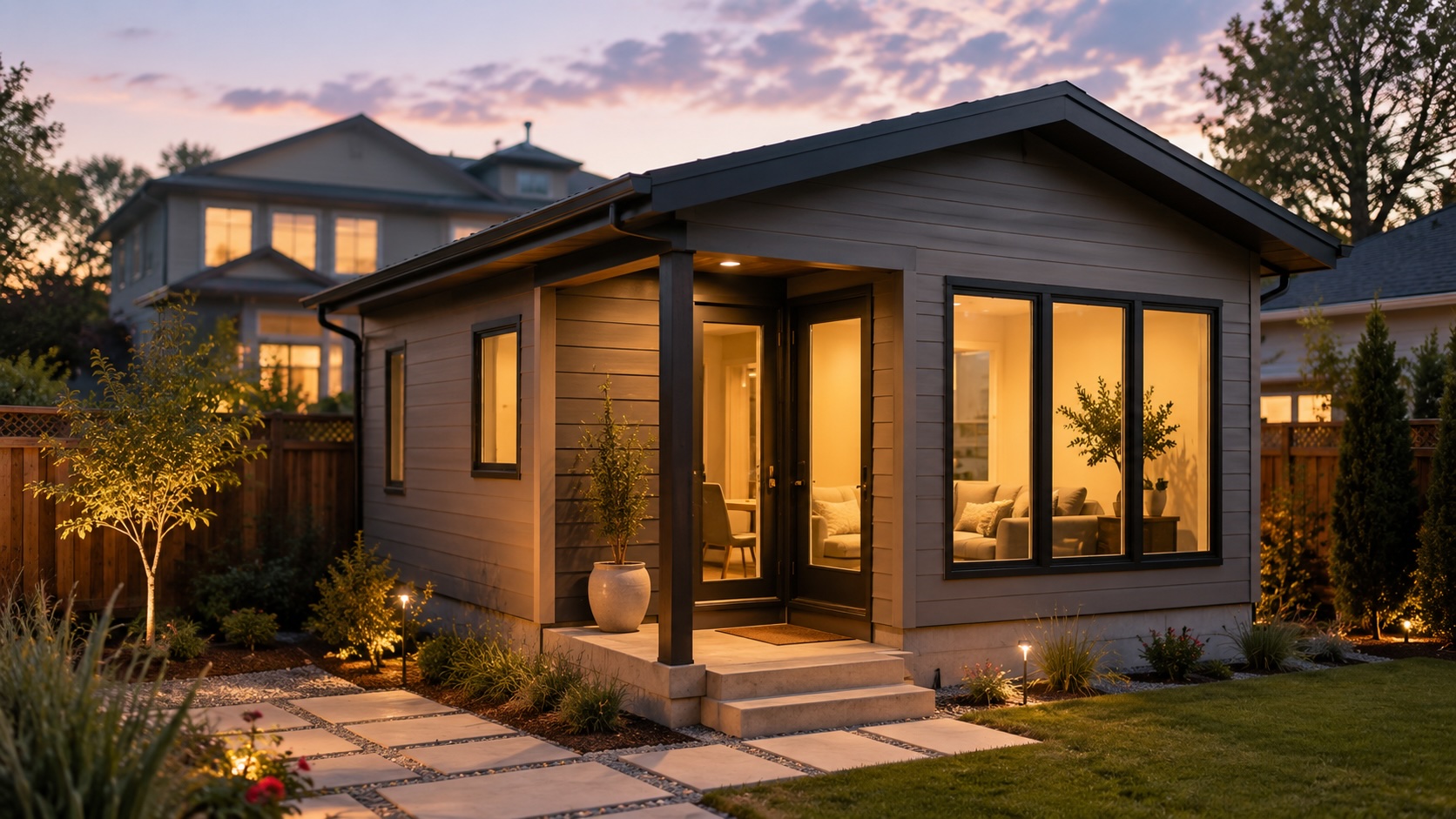
TL;DR: Most Colorado ADUs are financed with a construction loan, a HELOC, or a cash-out refi, and newer state-supported programs can improve the math in some cities.
ADU financing is usually the step that decides whether a backyard cottage or garage apartment actually gets built, because very few homeowners write a six-figure check from savings. The good news is that an accessory dwelling unit sits on land you already own, which opens financing doors that a from-scratch home purchase never sees. Home equity products, construction loans that convert to permanent financing, and renovation loan programs all apply, and Colorado has recently added state-supported options aimed specifically at ADU borrowers in participating cities. Which path fits depends on how much equity you hold, how big the project is, and how you plan to use the unit once it is finished.
Here is how the main options compare for Denver metro homeowners, and where the newer Colorado programs fit in.
Start With What the Project Actually Costs
Before any lender conversation, you need a real number to finance. A detached new-build ADU carries site work, foundation, utilities, and full construction costs, while converting existing space, most often a garage, starts from a structure that already has a slab, walls, and a roof. The two projects can differ dramatically in total cost even when the finished square footage is similar.
That gap matters for financing because it changes which products are even available. Smaller conversion budgets often fit inside a HELOC, while a detached build frequently pushes into construction loan territory. Walking through your lot, your existing structures, and your goals with a Denver ADU and conversion crew early gives you a scoped budget with contingencies, and lenders take a contractor-backed number far more seriously than a guess from a cost calculator.
The Main Financing Paths
Home Equity Line of Credit
A HELOC is the workhorse of ADU financing for owners who have held their homes through the Front Range’s long run of appreciation. It is a revolving line secured by your existing home, you draw on it as construction bills come due, and you pay interest only on what you have drawn. Closing costs are typically modest and the approval process is familiar to any lender.
The trade-offs are variable rates on most lines and a borrowing cap tied to your current equity rather than the value the ADU will add. For a mid-size conversion, a HELOC is often the simplest tool in the box. For a large detached build, the line may simply not stretch far enough.
Cash-Out Refinance
A cash-out refi replaces your existing mortgage with a larger one and hands you the difference in cash. It delivers a fixed rate and a single predictable payment, and it can unlock more money than a HELOC when you have substantial equity. The catch is that it reprices your entire mortgage at today’s rate, so the math depends heavily on the rate you currently hold. Homeowners sitting on a low rate from a few years back often find that giving it up costs more than any other feature of the deal, while owners whose current rate is close to market lose little.
Construction and Renovation Loans
Construction loans fund the project in draws as work completes, with inspections along the way, and most convert to permanent financing when the ADU is done. Renovation loan programs offered through conventional and FHA channels work similarly and are underwritten against the value of the property after the improvement rather than before it. That after-improvement valuation is the feature that matters most for ADU projects, because it lets the finished unit help qualify for the money that builds it. These loans involve more paperwork, appraisals, and lender oversight than an equity product, and they generally require a licensed contractor with a detailed budget and schedule.
Matching the Loan to the Project
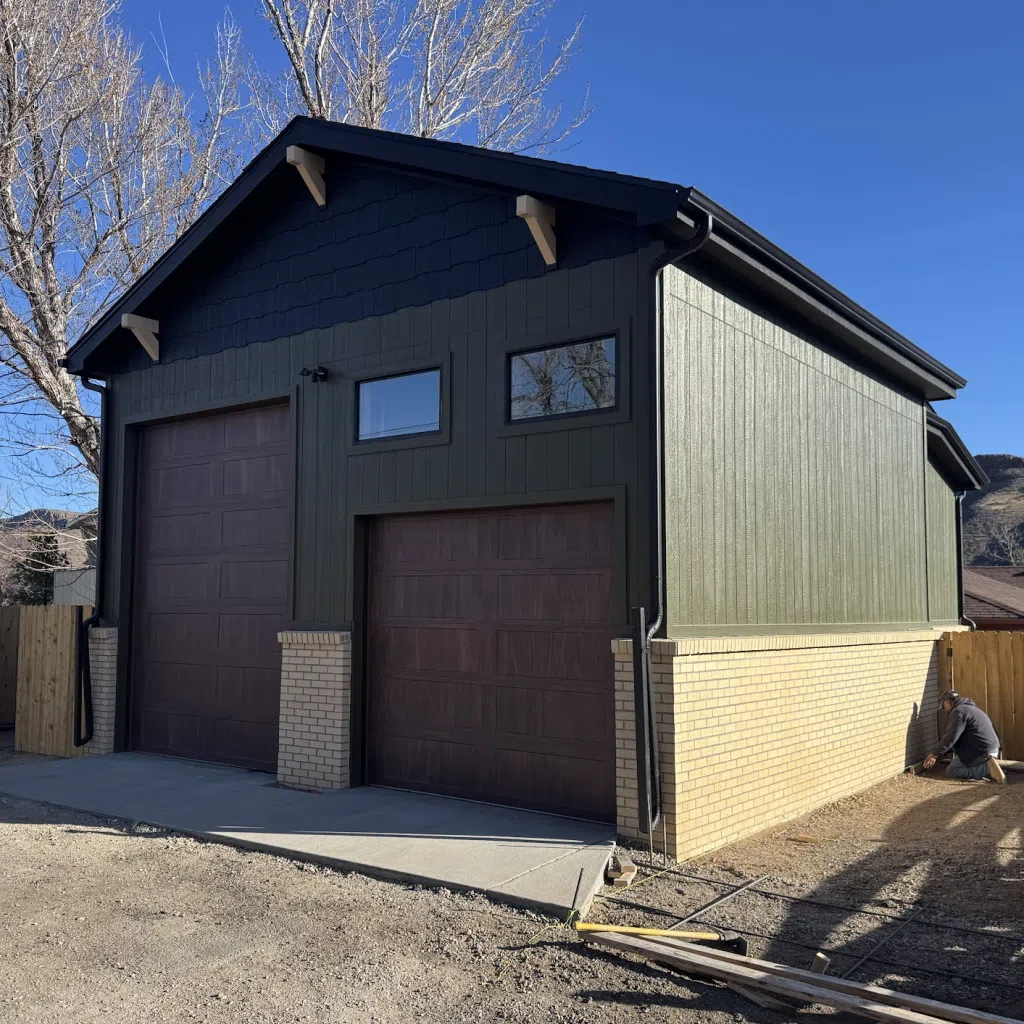
A pattern shows up quickly once you put the products next to real projects. Garage conversions and interior conversions, with their lower budgets, lean toward HELOCs and home equity loans because speed and simplicity beat the paperwork of a construction loan at that scale. Teams that handle custom garage builds alongside conversions can also tell you when an aging structure is not worth converting, which is a financing question as much as a construction one, because sinking borrowed money into a compromised shell is the worst outcome on the list.
Detached new-build ADUs push the other way, toward construction and renovation products, because the budgets are larger and the after-improvement appraisal helps carry the loan. Owners with large equity positions and current-market mortgage rates sometimes shortcut all of it with a cash-out refi. There is no universally right answer, only a right answer for your equity, your existing rate, and your project size.
Colorado’s ADU Law Changed the Backdrop
Financing an ADU in Colorado got more interesting after the state’s 2024 ADU law, HB24-1152. Under the law, subject jurisdictions, generally larger cities within metro planning regions, must allow one accessory dwelling unit wherever a single-unit detached home is allowed. The state’s Department of Local Affairs maintains a plain-language overview of the ADU law and its homeowner finance programs, and it is worth reading before you talk to any lender.
The finance piece is the part most homeowners have not heard about. Cities and counties that go beyond the minimum can be certified by DOLA as ADU Supportive Jurisdictions, and homeowners borrowing for ADU projects in those places can work through participating lenders to access ADU finance programs supported by the Colorado Housing and Finance Authority, including an interest rate buydown program and a credit enhancement program. Availability runs through lenders and depends on your jurisdiction’s status, so the practical move is to ask prospective lenders directly whether these programs apply to your address.
What Lenders Will Ask About the Rental Question
If part of your plan is renting the unit out, say so early in lender conversations. Some loan programs consider projected rental income in qualifying, others do not, and the treatment varies by product and lender. Keep expectations conservative: underwriting rules, local rental licensing, and your own appetite for being a landlord all belong in the plan before the loan closes, not after. A financing plan that only works if the unit rents immediately at top-of-market rates is thinner than it looks.
One more caveat belongs here: loan products, program rules, and rates change, and nothing in a blog post substitutes for sitting down with a licensed lender who can price your actual scenario.
Sequence It Right and the Money Gets Easier
The homeowners who move smoothly from idea to occupancy tend to follow the same order: scope and budget first with a builder, then permits and financing in parallel, then construction. Lenders fund confident numbers, and confident numbers come from a contractor who has priced the actual site conditions rather than a per-square-foot rule of thumb. If an ADU or garage conversion is on your list for the coming year, schedule a free consultation and we will help you build the scoped budget that makes the lender conversation a short one.
Frequently Asked Questions
What is the most common way to finance an ADU in Colorado?
Home equity products lead for smaller projects because they are fast and inexpensive to open, while construction and renovation loans are common for detached new builds. Longtime owners with strong equity often use a HELOC for conversions and step up to a construction loan when the project grows.
Can I use a HELOC to build a detached ADU?
You can if your available equity covers the budget with a contingency cushion. Many detached builds outrun what a line of credit can offer, which is when construction or renovation loans, underwritten against the property’s after-improvement value, become the better fit.
What are Colorado’s state-supported ADU finance programs?
Homeowners in cities and counties certified as ADU Supportive Jurisdictions can work through participating lenders on programs supported by the Colorado Housing and Finance Authority, including an interest rate buydown and a credit enhancement program. Ask lenders whether your jurisdiction qualifies, since availability depends on local certification.
Does an ADU increase my property value?
A permitted, well-built unit generally adds appraised value, but how much varies by neighborhood, comparable sales, and how appraisers in your market treat ADUs. Renovation-style loans that use after-improvement value give you an early, concrete read on what an appraiser expects the finished project to be worth.
Can projected rental income help me qualify for the loan?
Sometimes. Certain programs allow a portion of projected rent to count toward qualifying income, while others ignore it entirely. The treatment is product-specific and lender-specific, so raise the question early and get the answer in writing before you build a budget around it.
Is a garage conversion cheaper to finance than building new?
Usually, because the total budget is smaller and the existing slab, walls, and roof do part of the work. That smaller number often fits inside a HELOC, which keeps borrowing costs and closing complexity down. The exception is a structure in poor condition, where conversion costs can climb toward new-build territory.