
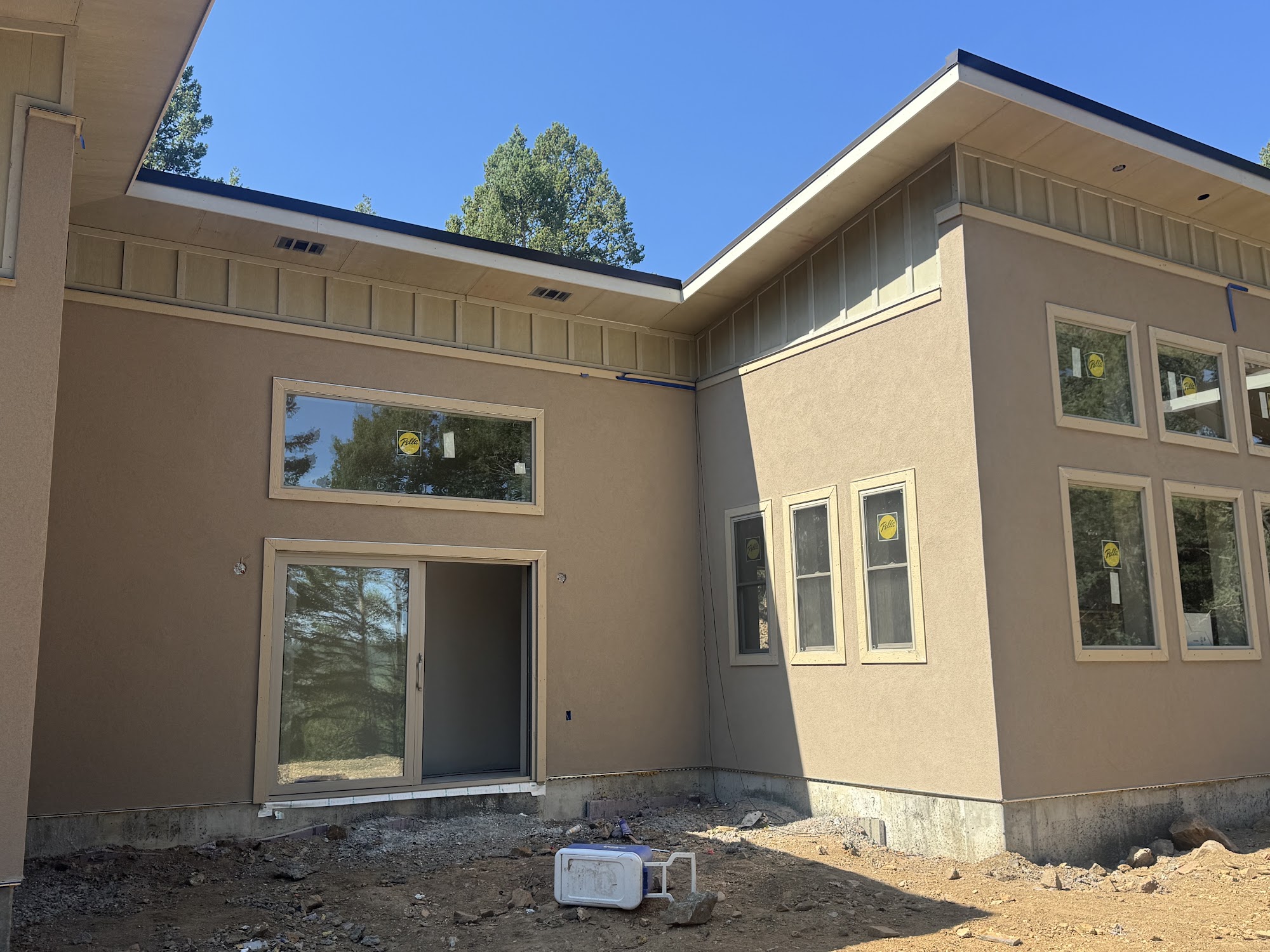
TL;DR: ICF costs more upfront than wood framing in Colorado, then works to earn it back through lower heating demand, faster dry-in, and a wall built for mountain weather.
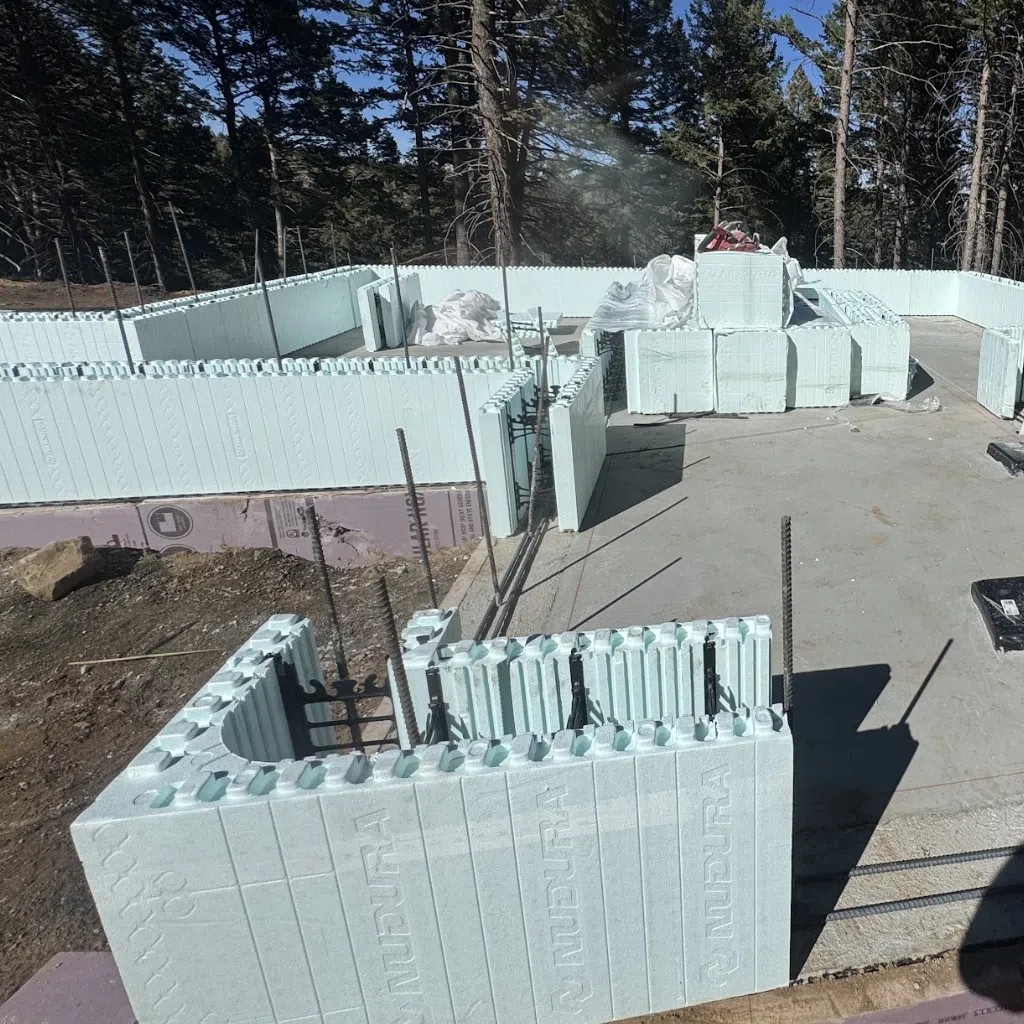
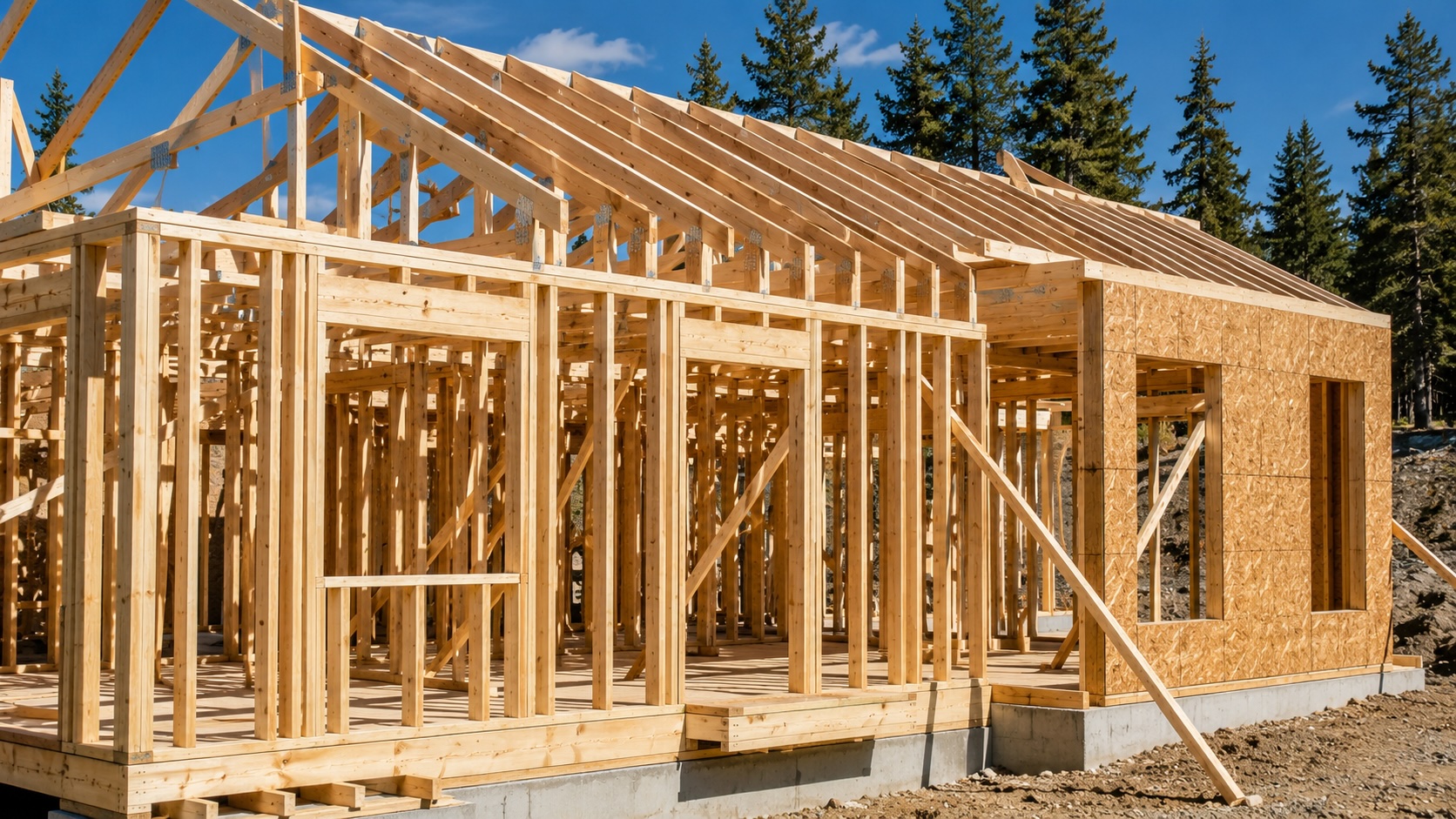
ICF and traditional wood framing solve the same problem, a structural exterior wall, in two very different ways. A framed wall is built on site from dimensional lumber, then insulated, sheathed, wrapped, and sealed by a series of separate trades. An insulated concrete form wall starts as hollow foam blocks that stack like oversized bricks, get reinforced with steel, and are then filled with concrete, so the structure, the insulation, and the air barrier go up as one assembly. That difference in how the wall comes together drives almost every cost, performance, and schedule gap between the two systems.
For Colorado homeowners weighing the two, the honest comparison is not “which is better” but “which trade-offs fit this project.” Here is how the numbers, the physics, and the calendar actually shake out.
Where the Upfront Cost Gap Comes From
Nobody should pretend the two systems price the same. Concrete, rebar, foam forms, and a pump truck cost more than studs and batts, and the gap is concentrated in the exterior walls. On a typical build, that premium lands in the shell phase, which is also the phase where owners feel it most because it arrives early in the draw schedule.
The gap shrinks once you count what the ICF wall already includes. A finished ICF wall needs no separate insulation contractor, no house wrap crew, and far less air-sealing labor, because continuous foam on both faces of the concrete core does that work by default. Framed walls reach comparable performance only by adding exterior rigid foam, careful sealing, and upgraded windows and details, and each of those line items narrows the difference.
Lumber pricing is also famously volatile, while concrete pricing tends to move more slowly, which makes ICF bids easier to hold through a long mountain permitting timeline. An experienced Denver ICF crew will price the wall as a complete assembly so you can compare it against framing plus insulation plus sealing, not against bare studs.
Performance in a Colorado Climate
Colorado is a heating-dominant state, and the Front Range piles on wind, hail, big daily temperature swings, and freeze-thaw cycling that punishes leaky assemblies. This is the category where the two wall systems separate most clearly.
Continuous Insulation and Air-Tightness
A framed wall insulates between studs, and every stud is a thermal bridge that conducts heat past the insulation. ICF wraps the entire concrete core in uninterrupted foam, so there is no framing to short-circuit the insulation and far fewer joints for air to sneak through. In practice that means fewer drafts, more even room temperatures, and a furnace that cycles less on a windy January night.
Thermal Mass at Altitude
The concrete core adds something batts cannot: mass. Colorado’s sunny winter days and cold nights produce wide daily swings, and a massive wall absorbs heat during the warm part of the cycle and releases it slowly as temperatures drop, flattening the indoor swing. The higher the elevation and the bigger the swing, the more that behavior is worth.
Codes Are Moving in ICF’s Direction
Energy code is not standing still here. Under state law, Colorado cities and counties that maintain building codes must adopt the Model Low Energy and Carbon Code, based on the 2024 International Energy Conservation Code, or a more stringent code whenever they update any building code after July 1, 2026. Framed walls can be detailed to meet tightening requirements, but they get there by adding layers and labor. An ICF wall tends to clear the bar as built, which simplifies both design and inspection as jurisdictions update their codes.
Snow, Wind, and Fire Exposure
A steel-reinforced concrete wall carries snow load and shrugs off downslope winds in a way dimensional lumber has to be engineered up to match. In wildfire-exposed foothills and mountain areas, the concrete core is noncombustible, which removes the wall itself as an ignition point. That does not make any house fireproof, and roofing, vents, decks, and defensible space still decide most of the outcome, but it is one more layer working in your favor rather than against you.
Build Time: Slower Wall, Faster House
Watching an ICF wall go up feels slow. Blocks stack, bracing goes in, rebar gets tied, and then a pump truck fills the whole thing in a day. Framing a wall from lumber looks faster in isolation, and often is.
The schedule math changes when you count the trades that never show up. Once ICF walls are poured, the structure, insulation, air barrier, and sheathing substrate exist simultaneously, so there is no waiting on an insulation crew, a wrap crew, and separate inspections for each. Any Denver custom home team will tell you sequencing is where framed builds bleed weeks, because each subcontractor needs the one before it to finish.
Cold weather tilts the comparison further. The foam forms insulate the fresh concrete during curing, which keeps winter pours practical in conditions that would stall other concrete work, while framing crews lose productivity in the same weather. Builders who work through mountain winters lean on that property to keep foundations and walls moving through months that would otherwise be dead time on the calendar.
The realistic summary: on a straightforward metro lot in mild weather, framing often dries in a little sooner. On a complex build, at elevation, or on any schedule that crosses a Colorado winter, ICF usually claws the time back and then some.
Long-Term Ownership: Where the Premium Pays Rent
The upfront gap is a one-time cost. The performance gap repeats every month you own the house. Lower heating demand through a seven-month heating season, less exterior maintenance, and a quieter interior are the recurring returns, and they compound over a decades-long hold. Concrete walls also do not rot, warp, or interest termites, which trims the slow drip of envelope repairs that framed houses accumulate.
Insurance deserves a careful sentence rather than a promise. Some carriers view concrete construction favorably in wildfire-exposed areas, and some owners pursue ICF partly for that reason, but underwriting decisions belong to carriers and vary by property, location, and market conditions. Treat any insurance benefit as a possibility to investigate with your agent, not a guaranteed outcome of the wall system.
Which Wall Belongs on Which Project
Traditional framing keeps its place. Interior partitions are framed even in ICF houses, and a simple detached garage on a metro lot is often best served by conventional framing, where the budget priority is the slab and the structure rather than the thermal envelope. Additions that must tie into an existing framed house also usually stay framed for continuity.
ICF earns its premium where the envelope works hardest: custom homes at elevation, houses in wildfire-exposed terrain, walkout basements and tall foundation walls, and any project where the owner plans to hold the house long enough for the energy math to matter. Plenty of Front Range projects land in between, and the right answer sometimes mixes systems, an ICF foundation and main level under a framed upper floor, for example. The wall system should follow the site and the plan, not the other way around.
Getting a Real Comparison for Your Build
The only comparison that matters is one priced against your actual plans, your lot, and your timeline, with both wall assemblies specified to the same performance target. That is the quote worth waiting for, because it converts everything above from generalities into numbers with your address on them. If you are weighing the two systems for a garage, a custom home, or a foundation, request a quote and we will price both paths honestly, including the one that costs less.
Frequently Asked Questions
Is ICF cheaper than traditional framing?
Not upfront. The concrete, steel, forms, and pump work cost more than lumber and batts, and the premium concentrates in the exterior walls. The comparison tightens when framing is detailed to match ICF performance, and lifetime cost depends on energy use, maintenance, and how long you hold the house.
Why does ICF cost more to build?
Materials and placement. Concrete and rebar cost more than studs, and a pour requires a pump truck and experienced crew. The offset is that the finished wall already contains its insulation and air barrier, so several line items that follow framing simply do not appear on an ICF budget.
Is ICF faster to build than a framed house?
Wall for wall, framing is usually quicker. Whole project, ICF often wins because the poured wall replaces several sequential trades, and because the insulating forms keep concrete curing on schedule in cold weather that stalls other methods. The gap favors ICF most on winter builds and mountain sites.
Does ICF make sense for a detached garage?
Sometimes. A basic unconditioned garage rarely justifies the premium, and conventional framing serves it well. A heated shop, a garage with living space above, or a build in a wildfire-exposed area changes the math, because the insulation and noncombustible core start earning their cost.
How does ICF handle Colorado snow load and wind?
The wall is steel-reinforced concrete, engineered for the loads at your specific site and elevation. It carries heavy roof snow loads and resists high winds as a matter of course, where a framed wall must be specifically engineered and hardened to reach similar capacity.
Will an ICF house lower my heating bills?
The assembly reduces heating demand through continuous insulation, low air leakage, and thermal mass, and Colorado’s long heating season is exactly where those properties matter. Actual savings depend on your design, windows, mechanical systems, and habits, so treat projections from your energy model, not a blanket percentage, as the real number.