
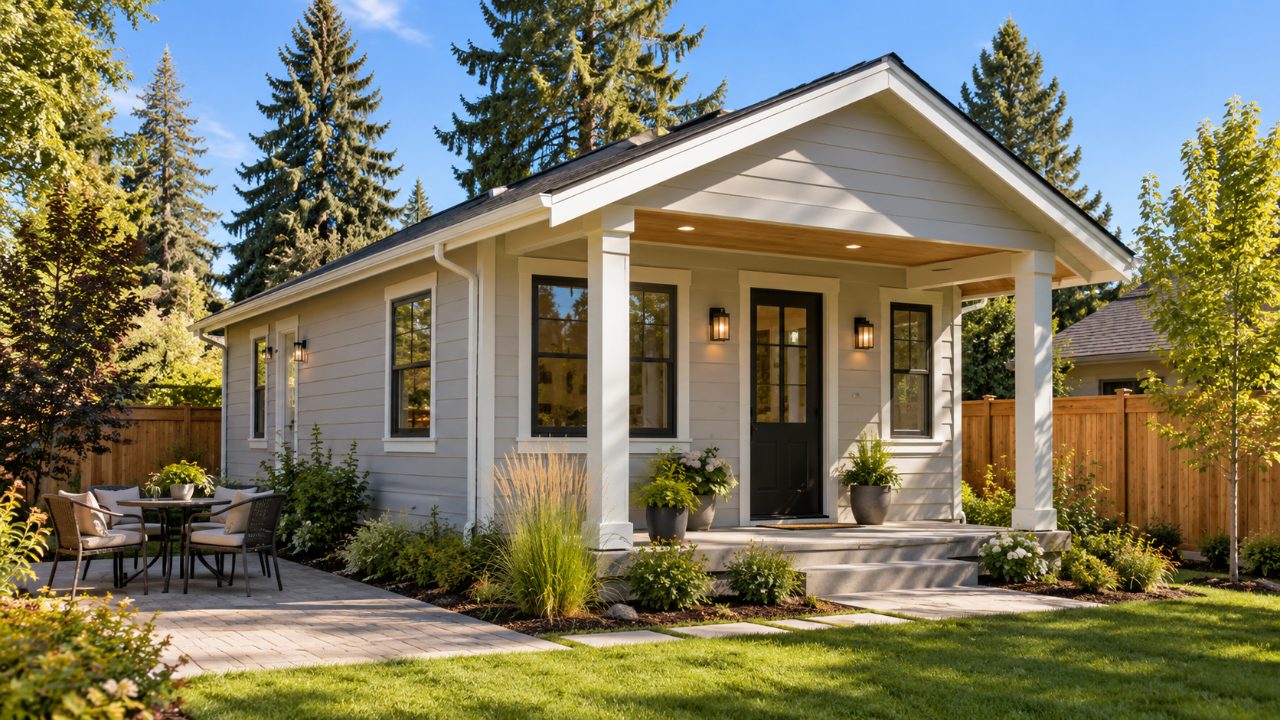
TL;DR: A Denver ADU rents for steadier income long term or more per night short term, but the rules, occupancy, and costs decide which one pays.
ADU rental economics is the comparison of what an accessory dwelling unit (a small, separate home on the same lot as a main house, such as a backyard cottage or a unit above one of the detached garages common on Denver lots) earns as a long-term rental, a short-term rental, or some mix of the two, after costs, taxes, and the rules that apply to each. For a Denver-area owner, the choice affects the monthly income, the licensing requirements, how much time the unit takes to manage, and how the build should be designed in the first place. The numbers below are worked examples with round figures so the arithmetic is easy to follow; replace them with quotes and rents from your own neighborhood.
Two Ways to Rent an ADU
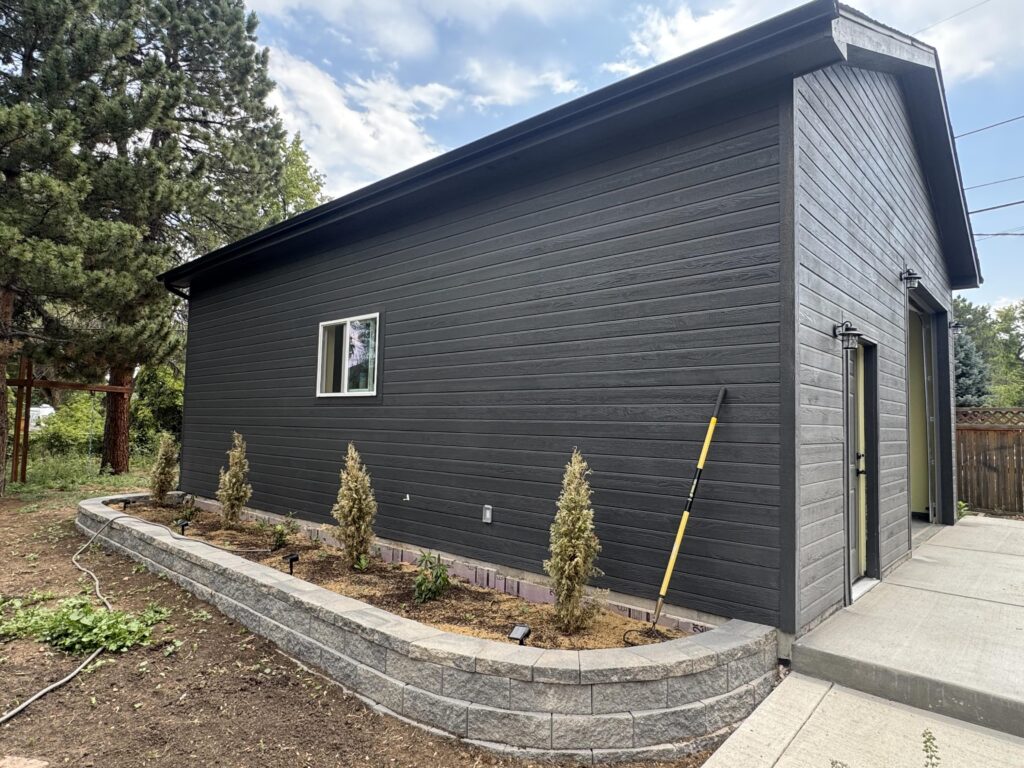
A long-term rental is a lease of 30 days or more, usually 12 months. The tenant pays a fixed monthly rent, covers some or all utilities depending on the lease, and the owner’s work is mostly finding a tenant, handling repairs, and renewing the lease. A short-term rental is a stay of fewer than 30 days booked through a platform such as Airbnb or Vrbo, with nightly rates that change by season and demand. The owner or a manager cleans the unit between every stay, handles guest messages, and pays platform fees.
Long-term rent is lower per month but steady. Short-term income has a higher ceiling and a lot of variation, especially in a market like Denver where summer and event weekends book well and winter weeks may not.
A Worked Example of Cash Flow
Take a one-bedroom ADU that rents long term for $1,800 a month. That is $21,600 a year. If the owner covers $2,400 a year in property tax and insurance attributable to the unit, $1,200 in repairs and turnover, and one month of vacancy between tenants ($1,800), the unit nets about $16,200 before income tax and loan payments.
Now run the same unit as a short-term rental at $140 a night with 55 percent occupancy. That is 365 nights times 0.55, or about 200 booked nights, and $28,000 in gross bookings. Subtract the same $2,400 for property tax and insurance and $1,200 for repairs. Then subtract the costs that only short-term rentals carry: about $4,500 for cleaning (roughly 60 stays at $75 each), about $850 in platform fees at 3 percent, and about $3,500 a year for utilities, supplies, linens, and replacing furnishings. The unit nets about $15,500, which is close to the long-term lease, with more hours of work and a wider range from year to year.
Occupancy moves the result more than the nightly rate does. At 40 percent occupancy the same unit grosses about $20,400 and nets roughly $9,400. At 70 percent it grosses about $35,800 and nets roughly $21,900. The break-even for this example is somewhere between 55 and 60 percent occupancy, and the unit has to reach it every year, not only in a good one.
The Costs People Leave Out
Short-term rentals need furniture, linens, kitchen supplies, and replacement of items that wear out. Wi-Fi, utilities, and streaming services are usually included in the nightly rate. Long-term rentals need less up front, but a tenant who stays a year can still cause $1,000 or more in repairs at turnover. In both cases the owner should reserve a percentage of rent for maintenance and for a roof, water heater, or appliance replacement in later years.
Licensing and Local Rules
The rules decide whether the short-term route is available at all, and they differ by city. Denver requires a license for short-term rentals and ties it to the host’s primary residence, so an investor who lives elsewhere cannot run one there. Whether and how an ADU on the same lot as the owner’s home qualifies is a question for Denver Excise and Licenses to answer before the unit is designed, since the answer affects whether short-term income should be in the plan. Lakewood, Arvada, Westminster, Aurora, and Littleton each regulate short-term rentals in their own way, and some limit or prohibit them in certain zones, so a rule that applies in one city can’t be assumed in the next. Rental rules also change, so confirm current requirements with the city before relying on them.
Long-term rentals have their own requirements. Most cities require a rental license or registration, and landlords have to follow Colorado’s warranty of habitability, which sets minimum standards for heat, water, and safe housing. Homeowner association covenants can prohibit rentals of any kind, and a covenant can override an otherwise permitted ADU.
A few lease terms matter more for an ADU than for an apartment, because the tenant shares a lot with the owner’s home. The lease should state who pays for which utilities (separate meters or sub-meters make this simple), who clears snow from the shared driveway and walkway, where the tenant and guests can park, whether pets are allowed, and what the quiet hours are. Putting these in writing avoids most of the disputes that come up between neighbors who share a yard.
Permits Decide Whether the Unit Can Be Rented
An ADU can only be legally rented if it was permitted and inspected as a dwelling, with its own kitchen, bathroom, egress, smoke and carbon monoxide alarms, and heating. Converting a garage or basement without a permit leaves the owner with a unit that can’t be legally leased, can complicate insurance claims, and can create problems when the house is sold. Design choices made early set up what the permit allows: a separate entrance, separate utility meters or sub-meters, and a layout that meets the city’s minimum ceiling height and window requirements. A Denver ADU and conversion crew should work through those zoning and permit questions before the plans are drawn.
Taxes on Rental Income
Rental income is taxable, and the usual way to report it is on Schedule E. The IRS explains that landlords generally report rental income and expenses on Schedule E, and that the owner begins to depreciate rental property when it is placed in service. Depreciation is a deduction that spreads the cost of the building over a number of years, so it can reduce taxable rental income even though no cash leaves the owner’s account. The same page says that if you provide substantial services to tenants, the income is reported on Schedule C instead. Short-term rentals that include services such as daily cleaning or breakfast can end up in that category, and the owner may also owe self-employment tax and local lodging or sales tax on stays. The tax treatment of a rented ADU depends on how it is used and whether the owner also lives on the property, so the owner should have a tax professional run the numbers before choosing a structure.
How the Build Affects Rental Income
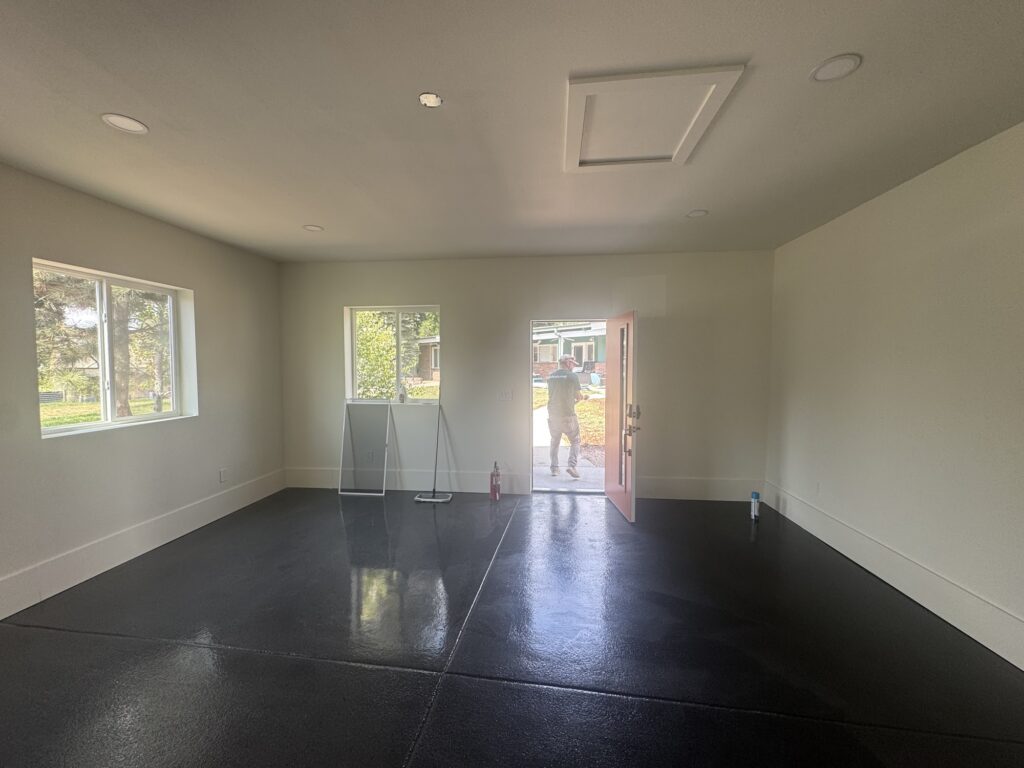
Long-term and short-term renters want different things from the same floor plan. A long-term tenant values storage, a washer and dryer, a private entrance, and a separate parking space, because they live there for a year or more. A short-term guest values a bed that sleeps two comfortably, a good kitchenette, strong Wi-Fi, a patio, and an easy self check-in. A one-bedroom with a small dedicated outdoor area handles both uses.
Construction quality affects operating cost directly. Sound insulation between the ADU and the main house reduces complaints from both sides. An efficient envelope and a ductless heat pump or similar system keep winter heating costs predictable in a unit that may sit empty between bookings. Because Colorado winters are long, a detached unit above a garage needs insulation and air sealing in the floor between the garage and the living space, or the unit will be cold and expensive to heat. For owners planning a unit above a garage, custom garage builds can be designed with the structure to carry a second-story unit from the start, which is far less costly than adding it later.
Financing and Payback
An ADU that costs $200,000 to build and nets $16,000 a year pays back in about 12.5 years on rent alone, not counting the added value to the property or any loan interest. A lender or appraiser may count the projected rental income in the loan decision, and policies differ. The simplest way to test a project is to calculate the payback using the lower of the long-term and short-term net figures, then treat any short-term premium as upside rather than as a number the loan has to depend on.
Choosing Between Long-Term, Short-Term, and Flexible Use
A long-term lease suits an owner who wants predictable income and little day-to-day work. Short-term renting suits an owner who lives on the property, qualifies under the city’s rules, and has the time or a manager to handle turnovers. Some owners start with a long-term lease for the first year to confirm the rules and costs, then switch if the numbers support it. Others keep the unit available for family stays, which is common in multi-generational households and does not change the build requirements. If you are comparing sites and designs for an ADU in the Denver metro, get a free estimate before choosing a layout.
Frequently Asked Questions
Is a long-term or short-term rental more profitable for a Denver ADU?
It depends on occupancy. In a worked example with a $1,800 monthly lease versus a $140 nightly rate, the short-term unit has to be booked roughly 55 to 60 percent of the year to match the lease after cleaning, fees, and supplies. Above that it earns more, and below it the long-term lease wins.
Can I short-term rent an ADU in Denver?
Denver requires a license for short-term rentals and ties it to the host’s primary residence. Whether a particular ADU qualifies depends on the lot and current city rules, so confirm with Denver Excise and Licenses before building. Other Denver-area cities have their own rules.
Do I need a permit to rent out an ADU?
Yes. The unit must be permitted and inspected as a dwelling before it can be legally rented, and the city may also require a rental license or registration. An unpermitted conversion can’t be legally leased.
How is ADU rental income taxed?
Landlords generally report rental income and expenses on Schedule E, and depreciation on the building can reduce the taxable amount. If you provide substantial services to guests, the income may be reported on Schedule C instead, and local lodging taxes can apply to short stays. A tax professional can confirm what applies to your situation.
Can my HOA stop me from renting an ADU?
Yes. Covenants can restrict or prohibit rentals or ADUs entirely, and they apply even when the city would allow the unit. Read the covenants before you design the unit.
How long does it take for an ADU to pay for itself?
Divide the build cost by the annual net rent. A $200,000 unit netting $16,000 a year takes about 12.5 years on rent alone. Added property value and any short-term premium shorten the payback, while loan interest lengthens it.